Bulk Gravel and Stone Delivery in Morris County, NJ
What do you order when gravel, stone and aggregate delivery in Morris County, NJ has to hold up on rocky northern ground? You start with quarry process. New Jersey Rock Supply delivers QP, washed stone, sand and soil in bulk by the ton, and QP is the base most drives, pads and paver jobs here are built on. The ground under Morris County runs from stony Highlands ridges to red shale and glacial till, so the base you pick matters more than the color of the stone on top.
Materials Delivered in Morris County
Order by size, coarsest to finest. The local names below are the ones your crew already uses, and the links go straight to the product pages.
Give quarry process the most thought. Order it for any job that gets compacted and paved, built on or driven on.
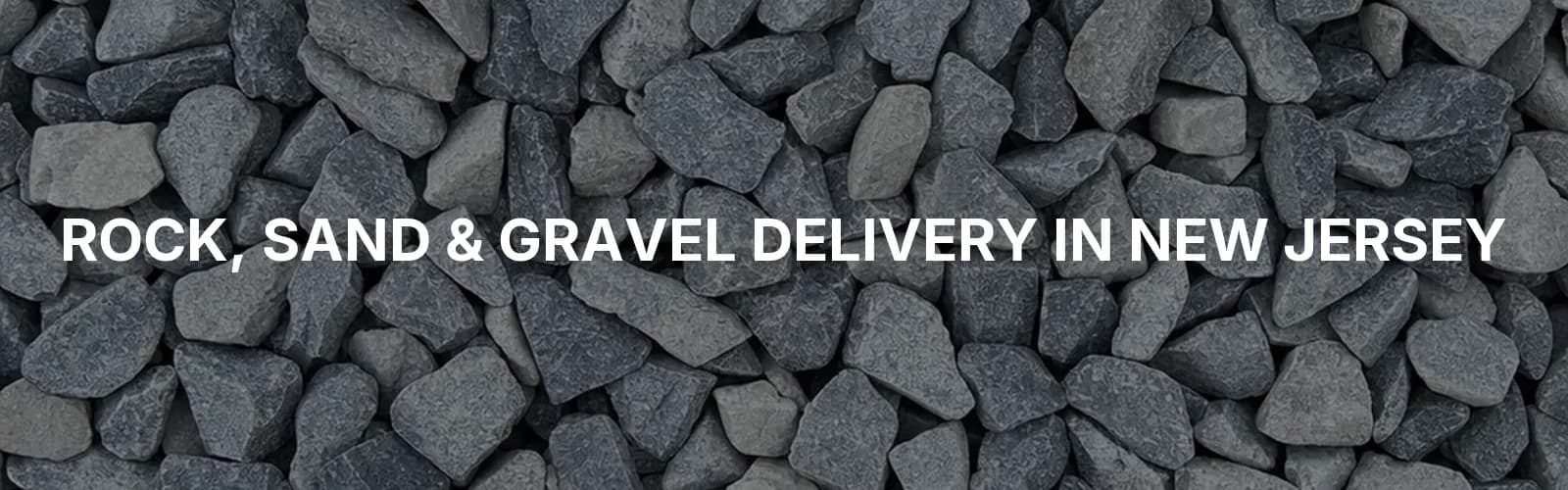
Above that base, the choice is about drainage and finish. Clean stone such as #57 Stone or #67 Stone lets water move. Trap rock, sold here as 3/4" Trap Rock, is the hard, dark crushed stone New Jersey is known for, and it works as a drive surface or a topping over compacted base. For softer ground, Fill Dirt raises grade before the base goes down.
Ground Conditions Across Morris County
Morris County sits in two ground zones, and the working season is the first thing to plan around. In the Highlands hill country around Randolph, Dover, Denville and Lake Hopatcong, frozen, snow-covered or thawing ground holds up base and grading work longer than anywhere else in the state. The average last spring frost lands around May 4 and the first fall frost around October 7. Frost depth runs 3 ft under the NJ residential code, so footings and base depths are set with real freeze-thaw in mind.
In the lowlands and ridges around Montville, Parsippany, Morristown and Madison, base, driveway and paver work runs from spring into late fall. Frozen or saturated ground slows compaction in mid-winter and after big storms. That ground is red shale and sandstone bedrock with basalt and diabase ridges, mostly covered by compact glacial till, sand and gravel, or silt and clay left by old glacial lakes.
Drainage drives the details. In the northwest, rain and snowmelt run fast off steep, rocky slopes and shallow rock, so narrow valley floors and river flats flood after heavy storms. Thin soil on those slopes washes out in heavy rain, and fast runoff scours stream banks, ditches and unpaved drives. Riprap and clean stone are the fix, not a wider gravel apron.
In the lowlands, compact till, clay-rich old lake beds and built-up ground shed water quickly, and the Passaic, Pompton, Hackensack and Saddle river basins flood after heavy rain and tropical storm remnants. Heavy rain scours stream banks and channels, and runoff cuts into steep ridge slopes and bare soil. Plan a drainage layer and a compacted base that can take a soaking.
Delivery Across Morris County
New Jersey Rock Supply delivers bulk material across Morris County, including Randolph, Montville, Parsippany, Morristown, Dover, Denville, Madison, Pequannock, Florham Park, East Hanover, Pompton Plains, Lincoln Park, Lake Hopatcong and Lake Hiawatha. You order online and size the load by the ton or by the cubic yard. Send the delivery address and what the material is for, and we route the truck from there.
A bulk delivery is a dump load placed where you can move it with equipment. Have the pad, drive or lawn edge cleared before the truck arrives. Most orders are scheduled within a few days of your request, and larger loads take a little longer to route. Order early in the season, before the spring rush fills the calendar.
Choosing the Right Material
Look at the county next door and the choice shifts. Somerset and Hunterdon counties sit in Central Jersey, and both span the Central Jersey Piedmont with its Raritan valley, Hunterdon plateau and Sourland ridge country, plus the same Northwest ridges and Highlands zone that Morris shares. Where the ground is similar, the material call is similar too, and the difference is usually the project rather than the soil.
Passaic County, next door to the north, also spans the North Jersey lowlands and ridges and the Northwest ridges and Highlands. Its lowlands drain the same Passaic basin, so base and drainage reasoning carries over almost unchanged. On the shared Highlands ground, expect the same shallow rock, steep slopes and late-winter compaction delays. If you know your job in Morris, you already know most of the answer next door.
Order Bulk Gravel and Stone in Morris County
New Jersey Rock Supply delivers quarry process, washed stone, sand, soil and decorative rock across Morris County, from Randolph and Dover to Morristown, Parsippany and the lake towns. Order online by the ton or yard and we will route the load to your job. Tell us the material, the quantity and the address, and place your order for delivery.